
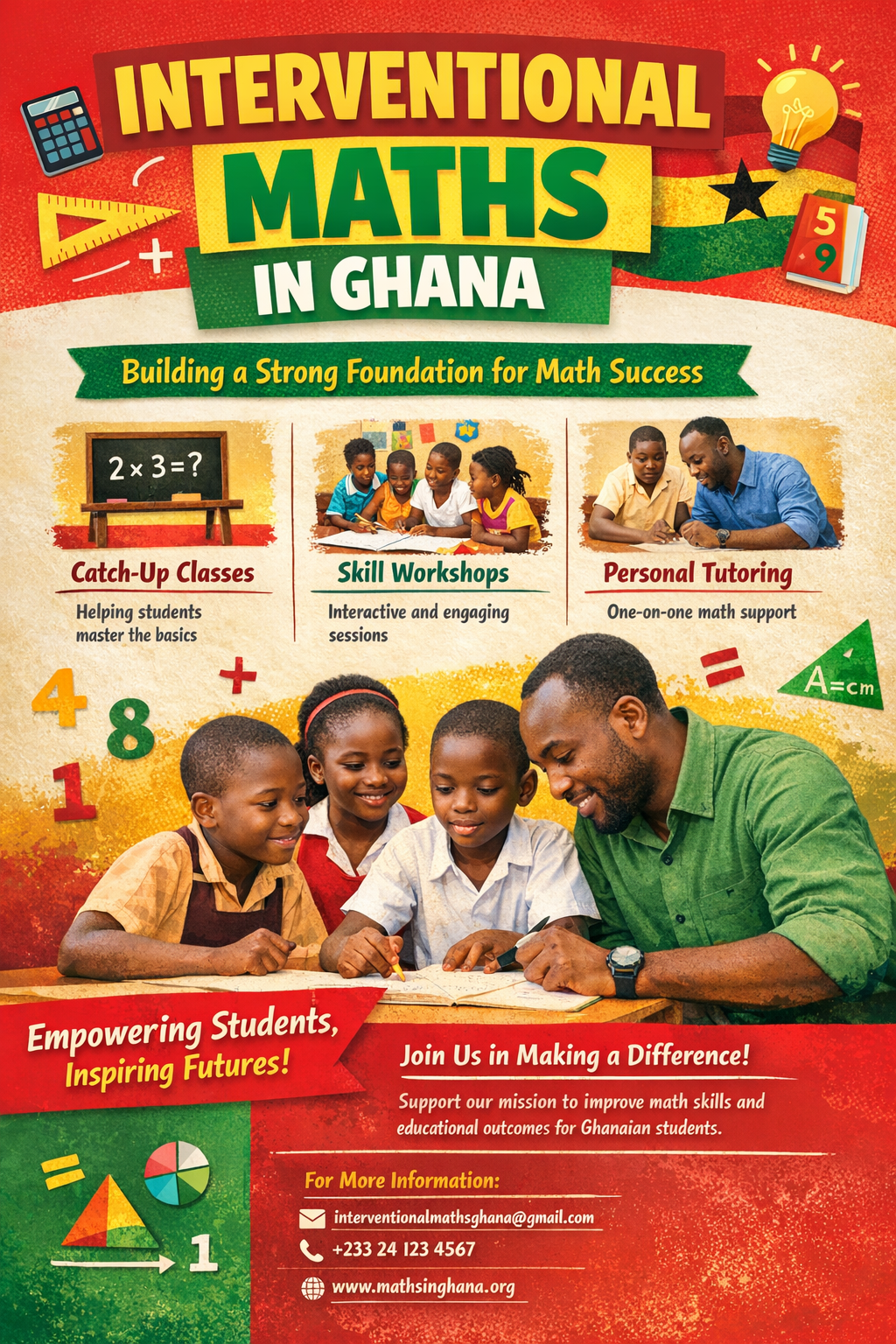
- Teacher: Admin User
Moodle is an open-source Learning Management System (LMS) that provides educators with the tools and features to create and manage online courses. It allows educators to organize course materials, create quizzes and assignments, host discussion forums, and track student progress. Moodle is highly flexible and can be customized to meet the specific needs of different institutions and learning environments.
Moodle supports both synchronous and asynchronous learning environments, enabling educators to host live webinars, video conferences, and chat sessions, as well as providing a variety of tools that support self-paced learning, including videos, interactive quizzes, and discussion forums. The platform also integrates with other tools and systems, such as Google Apps and plagiarism detection software, to provide a seamless learning experience.
Moodle is widely used in educational institutions, including universities, K-12 schools, and corporate training programs. It is well-suited to online and blended learning environments and distance education programs. Additionally, Moodle's accessibility features make it a popular choice for learners with disabilities, ensuring that courses are inclusive and accessible to all learners.
The Moodle community is an active group of users, developers, and educators who contribute to the platform's development and improvement. The community provides support, resources, and documentation for users, as well as a forum for sharing ideas and best practices. Moodle releases regular updates and improvements, ensuring that the platform remains up-to-date with the latest technologies and best practices.
Links of interest:

Course Summary: Introduction to Databases – SHS (Ghana Education Service)
This course introduces Senior High School students to the fundamental concepts and practical applications of databases in modern computing. Designed in alignment with the Ghana Education Service (GES) ICT curriculum, Introduction to Databases equips students with the knowledge and skills to understand, create, and manage databases effectively using appropriate tools and techniques.
Students will explore key topics such as data types, database structures, relational database models, tables, records, and fields. The course also covers essential database operations including data entry, retrieval, sorting, querying, and reporting. Emphasis is placed on the use of popular database management systems (DBMS) such as Microsoft Access, MySQL, and SQLite for hands-on learning.
By the end of the course, students will be able to:
Explain the purpose and importance of databases in various fields.
Identify and describe components of a database system.
Create and manage simple databases using graphical and command-line interfaces.
Perform basic queries using Structured Query Language (SQL).
Appreciate the role of data integrity, privacy, and security in database management.
Through practical exercises, group projects, and real-world examples, students will gain foundational database literacy essential for further studies in ICT, data science, and business information systems. The course also integrates Gender Equality and Social Inclusion (GESI) principles by encouraging inclusive participation and the use of case studies that reflect diverse perspectives.
This course prepares students for advanced ICT studies and supports their development as digitally literate citizens in Ghana’s knowledge-based economy.
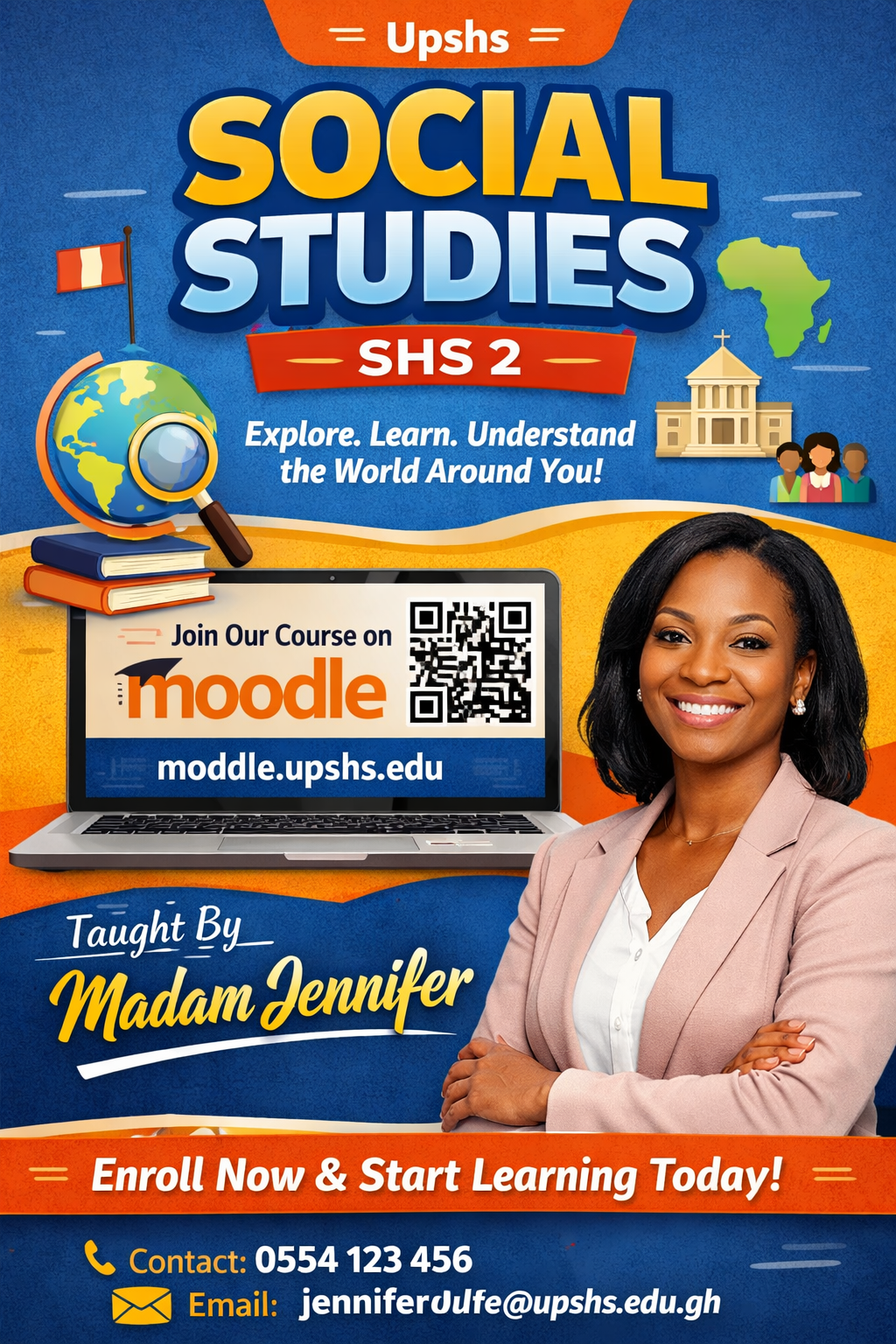
This course is designed to deepen students’ understanding of social, economic, political, and environmental issues affecting Ghana and the wider world. It equips learners with critical thinking, problem-solving, and decision-making skills necessary for responsible citizenship.
Through engaging lessons, discussions, and practical activities, students will explore topics such as governance, human rights, cultural values, national development, and global interdependence. The course also emphasizes the development of positive attitudes, ethical values, and active participation in community life.
Delivered via Moodle, students will have access to interactive resources, assignments, quizzes, and collaborative learning opportunities that support both independent and guided study.
By the end of this course, students will be able to:
Instructor: Madam Jennifer
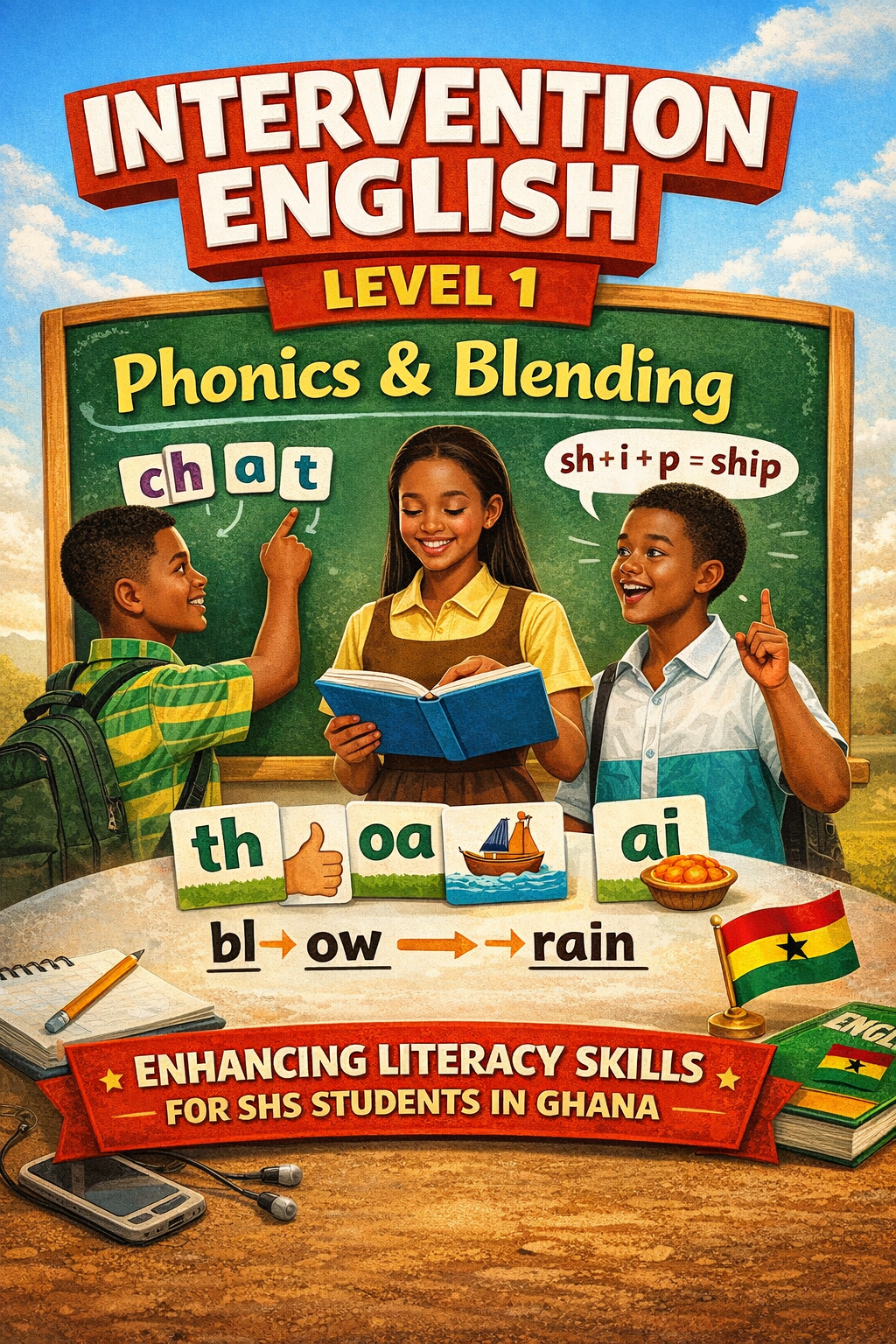
The Intervention English – Level 1 course is a foundational literacy programme designed to strengthen early reading skills among learners in basic schools in Ghana. The course focuses on helping struggling learners develop a strong understanding of English speech sounds (phonics) and the essential skill of blending, which are critical for reading accuracy, fluency, and confidence.
This course introduces learners to the relationship between letters (graphemes) and sounds (phonemes), beginning with vowel and consonant sounds and progressing to short and long vowel sounds, digraphs, and consonant blends. Learners are guided to recognise, segment, decode, and blend sounds in order to read words correctly and distinguish between similar-sounding words in spoken and written English.
Through structured lessons, practical examples, tables, and learner-centred activities, the course builds step-by-step reading competence. Learners engage in sound identification, word formation, pronunciation practice, and reading exercises that reinforce phonemic awareness. The course also emphasises the difference between blends and digraphs, enabling learners to decode unfamiliar words and improve spelling and pronunciation.
By the end of the course, learners are expected to:
Identify and pronounce English vowel and consonant sounds accurately
Recognise and use short and long vowel sounds
Identify consonant and vowel digraphs in words
Blend and segment sounds to read simple words and sentences
Build confidence in reading and basic communication in English
Overall, Intervention English – Level 1 provides a strong foundation for early literacy development, supporting learners to overcome reading difficulties and prepare for more advanced English language learning.